More Than a Cheque: The Case for Counting Chairs, Desks and Advice as Real Funding
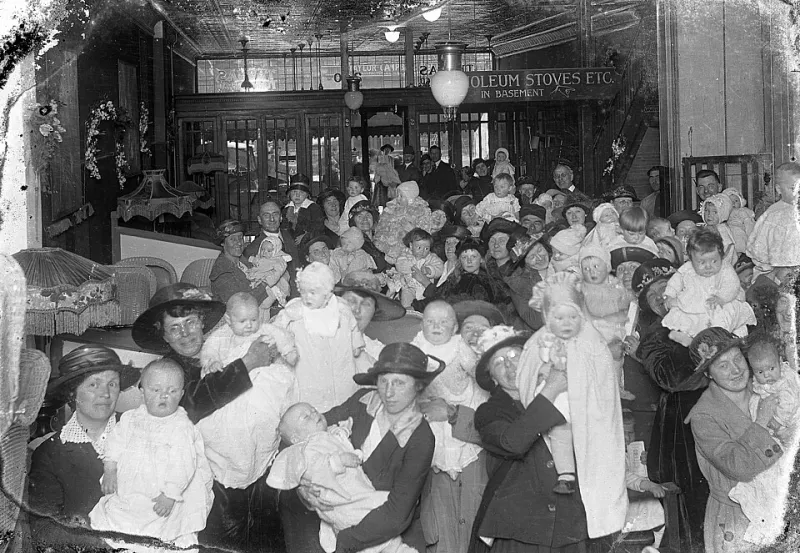
Photo: Hines Studio, Public domain, via Wikimedia Commons
Ask any chief executive of a community organisation what they received last year that mattered most, and you will rarely hear a figure. You will hear about the solicitor who reviewed a lease for nothing. The business park that let them use a meeting room on Tuesdays. The retired accountant who spends two afternoons a week untangling their Gift Aid claims. None of it appears in an annual report as income. All of it kept the organisation upright.
The Invisible Economy of Goodwill
British charity law is comfortable valuing donated goods and services — auditors have long required it — but the wider funding culture has never caught up. Grant reports ask how many pounds were spent. They do not ask how many hours of expertise were borrowed, or what it would have cost to buy them at market rates.
This blind spot matters because small charities are, in practice, propped up by in-kind support long before they are propped up by cash. A village hall running on volunteer caretaking, donated heating oil from a local merchant and a committee member's spare laptop is not a fragile fantasy. It is a functioning organisation whose true resource base simply never shows up in the accounts.
When a funder looks at that organisation and sees only a thin turnover, they misread it. They see weakness where there is, in fact, a quietly sophisticated barter economy.
Three Groups That Grew on Borrowed Resources
Consider three organisations we have come to know through our work across the UK.
The first, a youth mentoring project in the West Midlands, received a donated photocopier from a closing law firm. It sounds trivial. It was not. Printing meant leaflets, which meant referrals, which meant the project doubled its caseload within eighteen months — before a single grant was secured. The photocopier was, functionally, their development strategy.
The second, a food support service in a Scottish coastal town, was given free use of a disused shop unit by its landlord. The unit became a distribution point, then a drop-in centre, then the visible presence that convinced the local authority the group was credible enough to commission. Rent-free space did what three funding applications had failed to do: it made the organisation real to people with money.
The third, a refugee resettlement group in Yorkshire, was offered pro bono advice from a regional legal practice. Two sessions on safeguarding and data protection transformed their governance overnight. When they later applied for statutory funding, their policies were stronger than those of organisations with ten times their budget. A few billable hours, donated, bought them a seat at tables they could not otherwise reach.
Why Funders Default to Cash
There are understandable reasons money remains the default. Cash is legible. It can be tracked, reported, audited and compared. A grant of £10,000 looks the same in every spreadsheet. A donated Tuesday afternoon does not.
There is also a status question hiding in plain sight. Giving money is clean and dignified; giving second-hand furniture can feel condescending. Funders worry about appearing paternalistic, and so they retreat to the safety of the cheque.
But this instinct mistakes comfort for generosity. The organisations we speak to rarely describe donated expertise or space as second-best. They describe it as the thing that made cash go further — or, more often, the thing that arrived when cash could not.
What the Generous Funder of the Future Looks Like
We believe the most effective funders of the coming decade will behave less like banks and more like connectors. Alongside grants, they will offer:
- Space. Desks, storage, meeting rooms — the physical infrastructure small groups cannot afford but can transform.
- Skills. Structured pro bono arrangements with legal, financial and digital professionals, not ad hoc favours that evaporate when someone changes jobs.
- Introductions. The single most undervalued asset a funder holds is its contact book. One email to the right person can be worth more than a month of grant-writing.
- Equipment. Refurbished IT, furniture, vehicles — the unglamorous material base of community work.
None of this replaces money, and it should never be used as an excuse to offer less of it. In-kind support layered on top of fair funding is a multiplier. Offered instead of funding, it becomes a discount — and small charities have been discounted enough.
Counting What Counts
If we want an honest picture of how community organisations actually survive, we need to start valuing the photocopier, the shop unit and the Tuesday afternoon. We need funders to ask not just how much did you receive? but what else came through the door?
The Fraser Thomson Foundation exists to strengthen communities across the UK, and our experience is unambiguous: the organisations that endure are rarely the best funded. They are the best resourced — and resources arrive in more shapes than banknotes. It is time the funding world learned to count them.