Too Soon, Too Late: The Timing Problem Funders Refuse to See
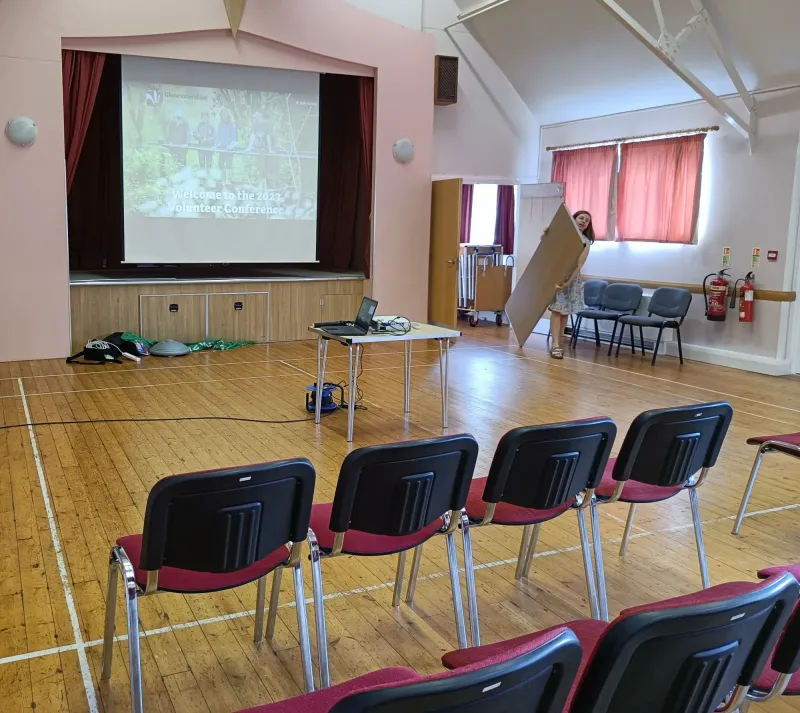
Photo: empty village hall chairs waiting community meeting room UK, via media.uncountable.uk
Every rejected application we decline receives a reason. The project was unfocused. The budget did not add up. The governance was thin. What those reasons rarely capture — and what we are increasingly convinced matters more — is something simpler and far less discussed: timing.
Over the past year we have gone back through declined applications and traced what happened to the organisations behind them. The pattern that emerged was uncomfortable. A striking number of those groups did not fail on merit. They failed on moment. They applied a year too early, or several years too late, and our process — like most in British philanthropy — had no vocabulary for that distinction.
The Committee That Arrived Before the Building Did
The first case was a village hall committee in the Shropshire borders. Their application was, by the standards we usually apply, promising: clear community need, a committed volunteer base, sensible costings. What they lacked was anything to fund. The hall they described existed only in a surveyor's report and a set of aspirations. The roof had not yet been formally condemned. The trust deed had not yet been updated to permit the work they proposed.
We declined, citing insufficient project definition. Eighteen months later, they reapplied and received a grant without difficulty. The application had not meaningfully improved. The project had simply caught up with itself.
The Charity That Waited Until It Was Too Late
The second case ran in the opposite direction. A youth organisation in the North East had spent nearly a decade delivering excellent work on short-term funding. By the time they approached us, their reserves were exhausted, their key workers had left, and the application they submitted was written — as they admitted to us later — mostly by one exhausted coordinator in the evenings.
We declined for weak financial planning. In truth, the financial planning had been strong for nine years. What they needed at the point of application was not a grant but a rescue, and our process, like most, is not designed to tell the difference between an organisation that is struggling and one that is simply late.
The Group That Applied at Exactly the Wrong Moment
The third case is the one that lingers. A community café venture in a Midlands town applied six weeks before their local authority confirmed a complementary regeneration grant. Had they waited one funding round, the two bids would have reinforced each other. Instead, our assessors saw a project with a hole in its budget and declined. The timing was nobody's fault and everybody's loss.
What We Mean by Readiness Support
These three cases have led us to a conclusion we think the sector should argue about: much of what we call rejection is really a misdiagnosis of unreadiness. And unreadiness is not a verdict — it is a stage.
We are therefore trialling what we are calling readiness support. Where an application fails on timing rather than substance, we will say so plainly, and we will offer something other than a decline letter: a conversation with our programmes team, signposting to development support, and an explicit invitation to return when the moment is right — with a named contact and a note on file so the group does not start from zero twice.
This is not a scheme to soften standards. Some applications should be declined outright, and will be. But a village hall committee that needs another year, a charity that needs rescue rather than a grant, and a café that needs to wait one round — these are not failures of merit. They are failures of moment, and funders are uniquely placed to see them coming.
We judge applications carefully. It is time we judged the calendar just as carefully. The group that applies a year too early is often the group we will be proudest to fund later — provided we have not taught them, through silence, to stop asking.