From Volunteer Ranks to the Payroll: The Moment a Community Group Grows Up

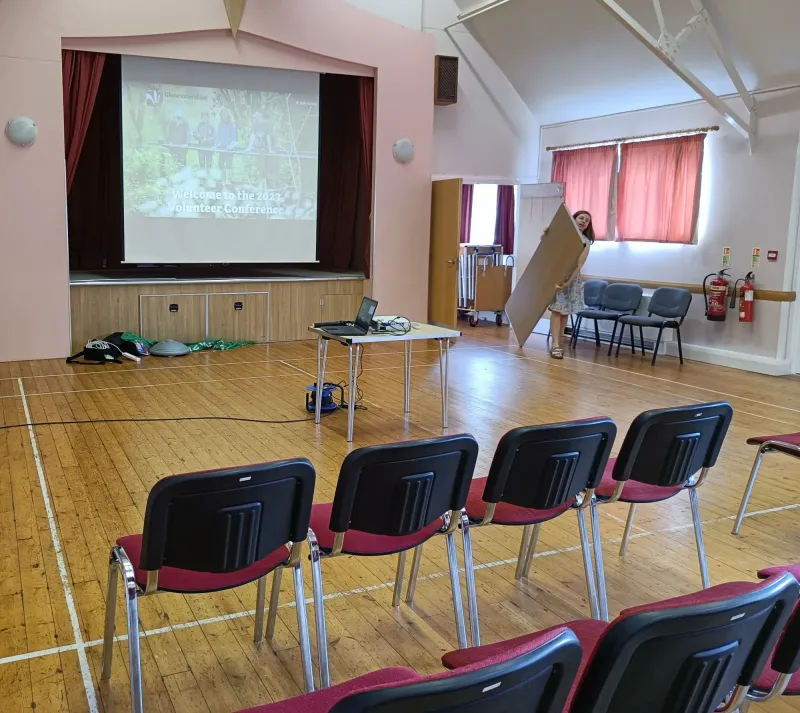
Photo: small charity trustees meeting around table in community hall UK, via wcva.cymru
There is a moment, familiar to anyone who has sat on the committee of a village hall, a residents' association or a food pantry, when the conversation changes. Someone says it quietly, almost apologetically: perhaps we should pay someone to do this.
It sounds like a sensible suggestion. In practice, it is a threshold. On one side sits the volunteer-run organisation — informal, resilient, occasionally chaotic, but entirely its own. On the other sits something recognisably different: contracts, PAYE, supervision meetings, employers' liability insurance. Crossing that line is where many small charities stumble, and where others find their footing for the first time.
The Whistle Nobody Trained For
Trustees who have spent years running a community group on goodwill often describe the arrival of their first employee as being handed a whistle in a game they have never refereed. Employment law does not distinguish between a charity employing one person and a corporation employing ten thousand. Contracts must be right. Holiday and sick pay must be calculated. If it goes wrong, the trustees are personally exposed.
The people we speak to rarely regret taking the leap. But nearly all of them describe the first year as harder than writing the funding application that made it possible. One treasurer in the West Midlands told us she spent three evenings a week for a month teaching herself pension auto-enrolment rules — work that sits nowhere in any impact report.
What the New Employee Walks Into
It is easy to forget the other side of the arrangement. The first paid worker often arrives to find an organisation held together by memory rather than documentation. Their job description may have been written to satisfy a funder's criteria rather than to describe a real week of work. Boundaries blur: when the committee has always done everything, what exactly is the employee's to do alone?
Handled well, the role becomes an engine — the person who applies for grants, keeps the books current, and gives the organisation continuity it never had. Handled poorly, it becomes a fault line between paid staff and the volunteers who feel displaced.
Why Funders Get It Wrong
The typical grant offer funds a salary for two or three years. It rarely funds the machinery around that salary: HR advice, a proper recruitment process, trustee training in employment responsibilities, or — crucially — a sustainability plan for what happens when the grant ends.
This is a gap the funding sector should own. If a first employee is the moment a small charity either professionalises or destabilises, then the transition itself is the intervention point. A modest allocation for employment advice at the point of award costs a fraction of the grant and dramatically improves the odds that the salary does what it was meant to do.
What Good Support Looks Like
The funders who navigate this well tend to do four things:
- Fund the infrastructure, not just the post — recruitment costs, HR support, and a laptop with working software are not luxuries.
- Fund the trustees, not only the worker — a short induction in employer responsibilities prevents most of the common failures.
- Talk honestly about the end date — a salary with no plan beyond year three is a cliff edge with a nicer view.
- Stay available — the questions that sink first employers are rarely dramatic. They are small, specific and easily answered by someone who has seen them before.
Growing Up Without Growing Apart
The best outcomes we have witnessed share a common thread: the organisation grew its capacity without losing its character. The paid coordinator did not replace the volunteers; they gave them somewhere to direct their energy. The committee did not abdicate responsibility; they learned to govern rather than to do.
That balance is not achieved by accident, and it is not achieved by money alone. It is achieved when funders treat the first hire not as a line item but as the delicate, formative event it truly is — the moment a group of neighbours becomes an institution. We would rather be present for that moment, properly, than simply watch it from the safety of a signed grant letter.