Six Weeks on the Other Side of the Desk: Notes From a Community Centre Waiting for Our Answer
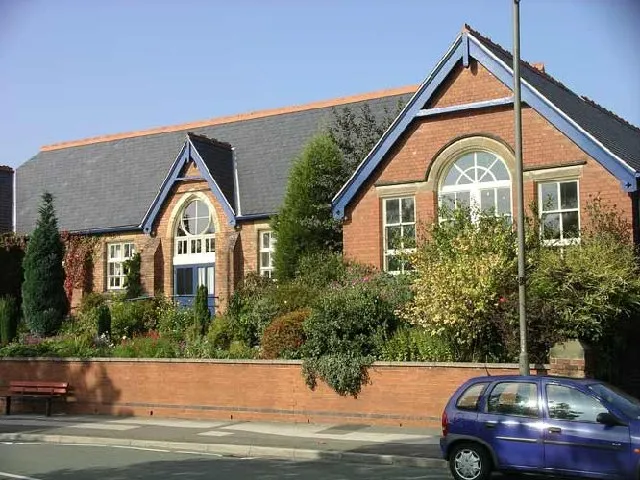
Photo: mike smith, CC BY-SA 2.0, via Wikimedia Commons
The Email That Left the Building
On a grey Tuesday in February, at 4.47pm, a woman named Pat Brennan pressed send on a grant application to the Fraser Thomson Foundation. Then she did something we at the Foundation rarely see: she went home and thought about it for eleven hours.
We know this because we asked her to let us watch. For six weeks, a writer was embedded at the Langworthy Community Centre in Salford — not to audit, not to assess, but simply to record what happens on the applicant's side of the desk while a funder deliberates. We wanted to know what our own process feels like from the outside. We were not entirely comfortable with the answer.
Tuesday Nights and Folded Budgets
Langworthy's centre occupies a former school building, its hall used by a lunch club for older residents, a youth music programme and a food pantry that serves around ninety households a week. It has three part-time staff and a trustee board of five, all volunteers, most of whom met through the centre itself.
Pat, the centre's coordinator, submitted our application with a budget she had reworked four times. The writer watched her do it — cross-legged on the hall floor with a laptop balanced on a chair, redrafting figures after a trustee pointed out that the cleaning contract had gone up by £40 a month. "They want three years of accounts," Pat said, "and we've had two managers in that time. I've written a paragraph explaining it. I don't know if it's the right paragraph."
That sentence stayed with us. Our guidance runs to several pages. Nowhere does it say what a good explanation looks like.
The Refresh
The writer describes a rhythm that developed over the following weeks. Every morning, Pat opened her inbox before anything else. The Foundation's acknowledgement had arrived within a day — automated, polite, easily missed. After that, silence, which Pat interpreted in every possible direction: no news was good news, no news meant a problem, no news meant the application had been mislaid.
She was careful not to chase. "You don't want to be a nuisance," she told the writer. "You need them more than they need you." That asymmetry, spoken without bitterness, is the most important thing our writer brought back. We hold the money; therefore we hold the pause button. Applicants know it, and they organise their lives around it.
What the Wait Costs
The board met twice during the six weeks. Both times, the grant was item one on the agenda, and both times the discussion circled the same question: could they plan, or only hope? A decision to postpone hiring a sessional youth worker until "we hear" cost the centre a candidate who took another post. The pantry's volunteers absorbed extra shifts. Nobody complained, exactly. They adapted, which is what small organisations do — quietly, competently, and at a cost no impact report captures.
On day thirty-nine, an email arrived. The Foundation had approved the grant. Pat read it standing in the corridor, then walked into the hall and told the lunch club, who applauded over their tea. It was, the writer notes, a lovely moment. It was also thirty-nine days late in arriving at how it felt, because for thirty-nine days nobody at the centre had known whether the future was funded.
What We Have Changed
We publish this account because a funder that only ever studies its own paperwork learns a distorted lesson about itself. Since the writer handed over her notes, we have made three commitments: a named contact and an indicative timescale in every acknowledgement; a decision date we publish and keep; and feedback by phone, not just letter, for every applicant who asks.
Langworthy got its grant. The next applicant should not need a writer in the room to make their waiting visible to us.