Forty-Five Minutes, No Forms: What We Learned When a Fund Became a Conversation

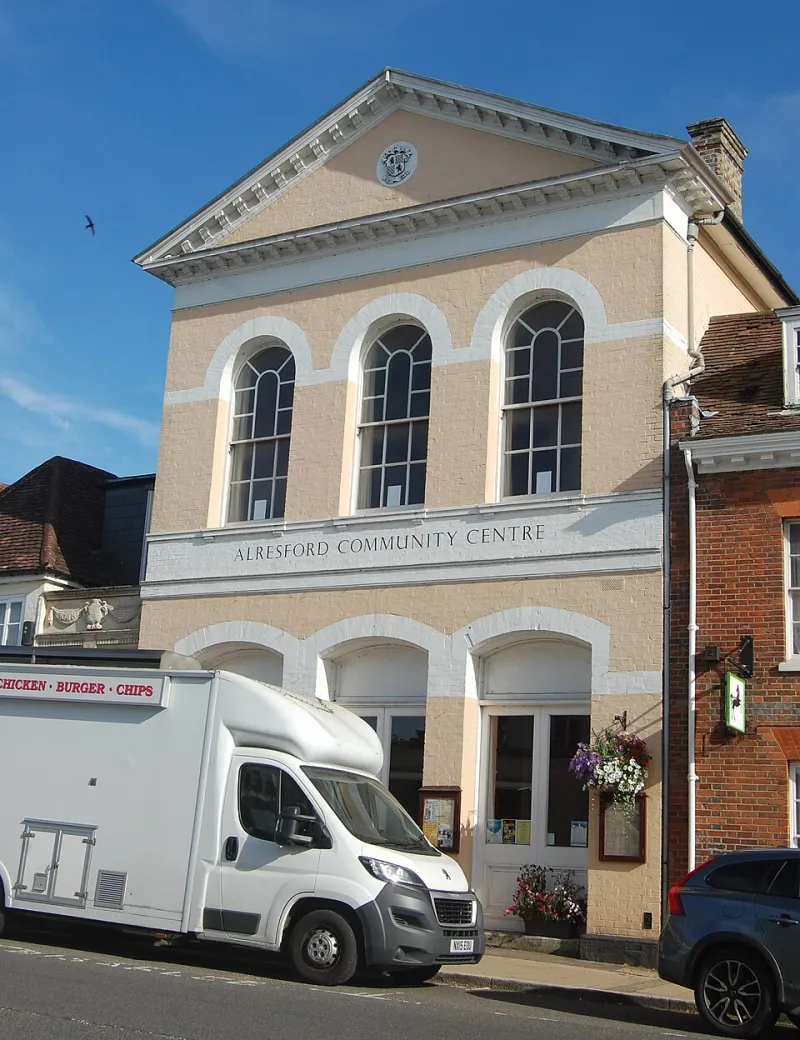
Photo: MIKI Yoshihito from Sapporo City,Hokkaido., JAPAN, CC BY 2.0, via Wikimedia Commons
There is a particular kind of document that haunts British community life: the funding application form. Twelve pages of boxes. Questions about outcomes, theories of change, and safeguarding policies written by people who have never run a parent-and-toddler group in a draughty church hall in Rotherham.
Earlier this year, we decided to try something different with one of our small grant funds. We deleted the form. In its place, we offered every applicant a forty-five-minute conversation — by phone, by video, or across a table in their own community centre. No written submission required beyond a name, a postcode, and a rough sense of what the money might do.
The experiment raised more questions than it answered, which is perhaps the point.
What We Heard When Nobody Was Writing for Us
The first thing we noticed was who applied. Groups that had never approached us before — a Somali women's knitting collective in Cardiff, a canal-side youth project in Walsall, two friends in rural Dumfries-shire running a warm space from a disused scout hut — suddenly found us approachable. Several told us, unprompted, that they had looked at our old form and given up halfway through.
The conversations themselves were richer than anything a form could capture. When a project leader in Sunderland explained that her group's real achievement was getting lonely men to return week after week, she could not have fitted that into the box marked 'measurable outcomes'. Sitting with her, we understood it immediately.
This is the promise of trust-based giving, and it is real. Conversation surfaces context, nuance, and need in ways that prose written under pressure never can.
The Problem With Comparing Apples to Silence
But honesty requires us to report the difficulties too.
Without paperwork, how do you compare candidates fairly? One applicant was fluent, warm, and persuasive. Another was nervous, halting, and undersold a project that — on any objective measure — was doing more for its community. Charisma is not impact, yet in a conversational model, charisma has an unfair advantage.
We also wrestled with accountability. Our trustees, quite properly, wanted evidence. A form, for all its flaws, creates a record. A conversation remembered by two people is harder to audit, harder to learn from, and harder to defend when a donor or regulator asks why the money went where it did.
There is a capacity question as well. Forty-five minutes per applicant is generous for the applicant but expensive for us. Scaled across a national fund, conversation-based grant-making demands staff time that many foundations, including ours, cannot always spare.
What We Have Decided
We will not be abandoning forms entirely, and we would caution any funder against treating the conversation as a panacea. But neither will we return to the old model unaltered.
Our compromise, trialled this autumn: a one-page expression of interest, followed by a structured conversation with a shared summary written up and agreed with the applicant. The summary gives our trustees their record; the conversation gives the applicant their dignity. Every candidate is asked the same core questions, in the same order, to keep comparisons honest — and panel members are asked to score against the answers, not the accent.
The lesson of our experiment is not that paperwork is evil or that conversation is magic. It is that funding is fundamentally an act of judgement about people, and the instruments we use to make that judgement should be chosen deliberately rather than inherited. A twelve-page form is a choice. So is a chair pulled up beside someone's kitchen table.
We think the second choice, handled carefully, tells us more. But it must be paired with the discipline the first one provides. Anything less risks replacing one failure with another — swapping bureaucracy for bias, and calling it progress.