Before the Project Plan, the Boiler: A Case for Funding the Ordinary

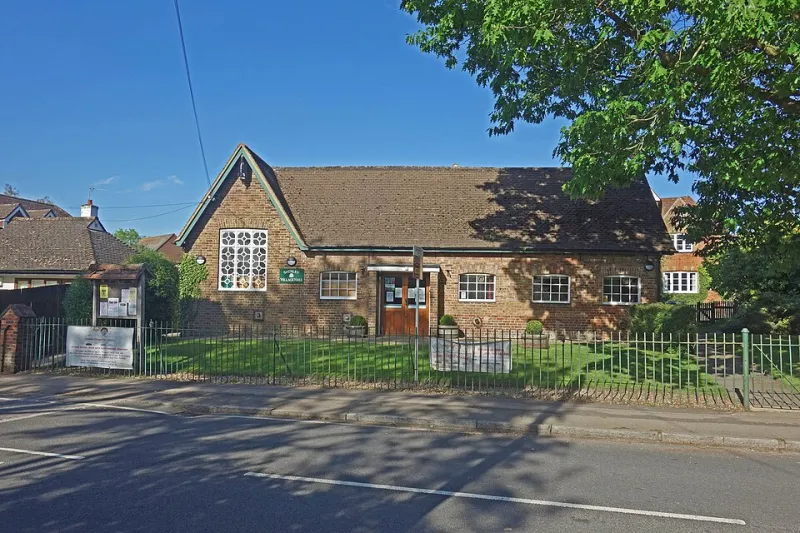
Photo: Chris.sherlock2, CC BY-SA 4.0, via Wikimedia Commons
There is a photograph we keep in our assessment files. It was sent, unprompted, by the treasurer of a community centre in the North East of England alongside an application for a new employability programme. The photograph shows a radiator. It is off. Beside it, in handwriting, is a note: 'We can run the course. We cannot run the heating.'
We funded the programme. But that image has stayed with us, and over the past eighteen months it has reshaped how this Foundation thinks about what a grant is actually for.
The orthodoxy we inherited
For decades, charitable funders — ourselves included — have operated on a simple principle: money should buy outcomes. Fund the mentoring scheme, not the electricity that lights the room where mentoring happens. Fund the youth worker, not the boiler that keeps the hall warm enough for young people to stay past half past four in February. Capital projects and core costs were treated as a last resort, something to be grudgingly considered once every avenue for 'proper' project funding had been exhausted.
The result is a sector propped up by deferral. Roofs wait. Boilers wait. Gutters wait. Organisations become extraordinarily adept at running brilliant programmes inside buildings that are quietly falling apart around them.
We no longer believe this is defensible. A warm room is not overhead. It is the precondition for everything else.
What the energy crisis made plain
The spike in energy costs that began in 2021 did not create this problem; it exposed it. Organisations that had spent years cobbling together project grants suddenly faced electricity bills that had doubled or trebled. Many responded exactly as the sector had taught them to: they cut sessions. They opened for fewer hours. They told the Tuesday lunch club and the Thursday toddler group that the building simply could not afford them.
Consider what that means in practice. A village hall in Cumbria closes for the winter because its oil tank cannot be filled. A community centre in Salford limits its warm space provision to two afternoons a week — not because demand has fallen, but because demand and affordability have diverged. The building is still there. The people still need it. What is missing is the unglamorous money that makes the building function.
When we reviewed our own grants data, we found the pattern repeated across our portfolio. Applications for activities were robust and well-evidenced. Applications for running costs were apologetic, hedged, often written as though the applicant expected to be scolded for asking.
They expected to be scolded because funders had spent thirty years teaching them to.
The Warm Room Test
We have now adopted what we call internally the Warm Room Test. Before we assess any proposal for a new project, we ask one question: can this organisation keep its premises heated, lit and safe for the next twelve months? If the answer is no, the first grant we discuss will not be for the project. It will be for the boiler, the insulation, the electricity arrears, the broken window, the emergency lighting certificate.
This is not a softening of our standards. It is a reordering of them. An outcome delivered in a freezing, hazardous or closed building is not an outcome we wish to be associated with.
In practice, this has meant some uncomfortable departures from convention. We have made grants with no delivery targets attached. We have paid energy bills directly. We have funded maintenance work that no evaluator will ever be able to point to in an impact report. We have accepted that some of the most consequential money we distribute this year will produce nothing measurable at all — except rooms that stay open.
Answering the obvious objection
The objection writes itself. Funders have finite resources; every pound spent on a boiler is a pound not spent on services. If we fund running costs everywhere, do we simply subsidise inefficient estates?
We take the concern seriously, and it is why the Warm Room Test is a test rather than a blank cheque. Where energy inefficiency is the root problem, we will fund the fix — insulation, glazing, heating upgrades — rather than indefinitely topping up bills. Where governance or financial management is the underlying issue, we will say so and offer support. What we will no longer do is pretend that a project grant can substitute for a functioning building.
Nor do we accept the framing that keeping the lights on is somehow less rigorous than funding delivery. When a community centre closes, the loss is not abstract. It is the carers' group with nowhere to meet. It is the food bank without a distribution point. It is the only place in the neighbourhood where an isolated pensioner is known by name. The intervention is the room. Everything else happens inside it.
A quiet invitation to our peers
We are a modest foundation, and we do not pretend our policy change will shift the sector on its own. But we would offer this to fellow funders: look at your rejection letters and your grant conditions and ask whether, somewhere along the way, you taught applicants that the ordinary costs of existence were a source of shame.
If the answer is yes, it is never too late to unteach it. Ask for the photograph of the radiator. Ask what happens in that building in January. Then fund accordingly.