Who Decides? The Case for Rebuilding Trustee Boards From the Ground Up
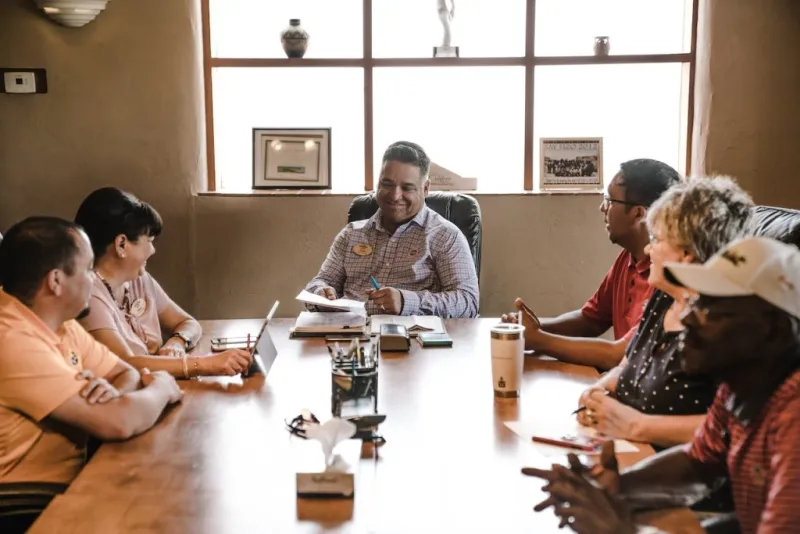
Photo: diverse charity board meeting community centre UK, via www.qgiv.com
There is a peculiar irony at the heart of British community charity governance. The organisations most trusted to understand a neighbourhood — the food projects, the youth clubs, the tenants' associations — are routinely governed by people who live miles away and encounter that neighbourhood only through a quarterly board pack.
The data bears this out. Sector surveys have repeatedly found that the overwhelming majority of trustees in England and Wales are aged 50 or over, that most are university-educated, and that few are drawn from the communities their organisations serve. This is not a moral failing unique to any single charity. It is the predictable outcome of a recruitment model that relies on personal networks, professional connections and, too often, whoever happens to say yes.
The Distance Problem
When we speak to community leaders across the UK — from post-industrial towns in the North East to coastal wards in Cornwall — a familiar frustration emerges. Decisions about their work are made by boards whose members are, in the words of one community organiser in Bradford, "wonderful people solving problems they've never seen."
The consequences are rarely dramatic. More often they are quiet: a bid shaped to satisfy a trustee's assumptions rather than local need; a service redesigned around funder reporting cycles rather than school terms; a reluctance to take risks because the board cannot fully weigh what failure would mean on a particular street.
Governance distance compounds itself. Boards that do not reflect their communities recruit in their own image. Within a decade, an organisation founded by local residents can find itself governed entirely by professionals from elsewhere.
Why Well-Meaning Boards Stay Uniform
It would be easy to frame this as a matter of intent, but intent is rarely the issue. Three structural forces do most of the damage.
First, the reliance on word-of-mouth recruitment. If a board fills vacancies through the networks of existing trustees, it inherits their demographics wholesale.
Second, the unpaid nature of trusteeship itself. Serving on a board demands daytime meetings, financial literacy and confidence in institutional settings — all of which presume a certain kind of life experience. For someone working two jobs or managing caring responsibilities, the implicit entry requirements are formidable.
Third, a narrow definition of what governance knowledge means. Boards prize accountancy and legal expertise while undervaluing the lived expertise of the people who actually use the services.
What Radical Governance Could Look Like
If foundations and charities are serious about representation, modest tweaks will not suffice. A bolder model might include:
- Reserved places for people with lived experience, recruited openly and paid for their time, with training and mentoring built in rather than assumed.
- Staggered terms and fixed retirements so that board turnover is planned rather than accidental, creating regular openings for new voices.
- Community assemblies that feed directly into board decisions — not consultation exercises, but standing mechanisms with real influence over strategy.
- Expenses covered generously and meetings held at accessible times, in community venues, recognising that governance participation should not be a luxury.
- Co-governance arrangements, in which service users hold a defined share of board seats with equal voting rights.
None of this is theoretical. Community organisations in Glasgow, Salford and Tower Hamlets are already experimenting with versions of these models, and the early evidence suggests boards become more courageous, not less, when they are closer to the people they serve.
A Challenge to Funders — Including Ourselves
Funders bear particular responsibility here. When we require elaborate governance structures as a condition of grants, we incentivise small charities to recruit trustees who look like accountants rather than neighbours. When we treat a diverse board as a compliance box rather than a source of strength, we entrench the problem.
At the Fraser Thomson Foundation, we are beginning by asking harder questions of ourselves and of the organisations we support — not as an audit exercise, but as an honest reckoning with who holds power and why.
The boardroom is not the community. It does not have to be, but until governance tables are rebuilt to include the people who live with the consequences of every decision, British community charities will remain only partially what they claim to be. The remedy is neither mysterious nor unaffordable. It simply requires those already at the table to make room — deliberately, permanently and on the community's terms.