Reading the Building: What a Village Hall Can Tell a Funder
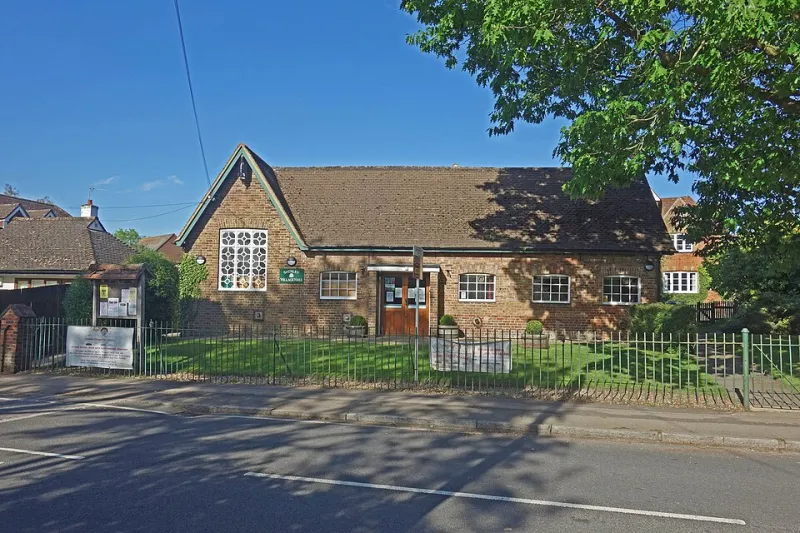
Photo: Jim Osley , CC BY-SA 2.0, via Wikimedia Commons
We have read thousands of grant applications at the Fraser Thomson Foundation. Some are beautifully written, others barely coherent, and experience has taught us that neither quality correlates reliably with impact. What we have learned to trust more is the building itself — the village hall, the converted chapel, the portakabin behind the leisure centre. Physical spaces, we have come to believe, hold answers that no application form can capture.
The Application Problem
A funding application is a performance, however honest its author. It compresses a community's messy, improvised reality into outcome frameworks and budget lines. The volunteer committee that runs a draughty hall in the Rhondda or rural Perthshire must translate lived knowledge into the language of monitoring and evaluation — and something essential is lost in translation.
Site visits changed our thinking. When our grants team began accompanying applications with unannounced walks through the buildings they described, a pattern emerged. The organisations with the strongest local roots were rarely the ones with the glossiest paperwork. They were the ones whose buildings told a coherent story.
What the Fabric Reveals
Consider what a building actually records. A well-used kitchen — scuffed lino, a wall of rotas, tea urns that have clearly served three generations of funerals and harvest suppers — tells you that the space is embedded in local life. A recently repaired roof, funded by jumble sales and a WHS Community Bonanza cheque, tells you a committee can organise, save and deliver. Conversely, a hall that is immaculate but empty, booked twice a month, suggests an organisation holding on rather than reaching out.
Crumbling gutters are not automatically a warning sign. In many communities they are simply the next item on a list the committee cannot yet afford. The question is whether there is a list at all. We have learned to distinguish between buildings that are being loved on a shoestring and buildings that are being quietly abandoned.
Towards Capital Listening
From this work we have developed what we call 'capital listening': a due diligence approach that treats the physical asset as a primary source. Before a grant decision, our assessors walk the building with the caretaker, not the chair. They look at the boiler service history, the booking ledger, the disabled access route, the noticeboard. They ask what was fixed last and what is fixed next.
This is not an audit. It is a conversation conducted in building fabric rather than prose. A leaking flat roof discussed in situ produces a far more honest exchange about capacity and need than any question about 'organisational resilience' on a form. Committees that struggle to articulate their value in writing often speak with total fluency about their buildings — because the building is how they understand their own work.
What This Means for Funders
We are not suggesting funders abandon paperwork or that every application warrants a visit. But we do propose three shifts. First, weight asset condition and usage evidence alongside written narrative. Second, fund the unglamorous middle: not just flagship capital projects, but the boiler, the guttering, the kitchen refit that keeps a hall viable for another decade. Third, accept that a shabby, busy building usually signals stronger community capacity than a pristine, empty one.
Britain's community buildings are under strain from every direction — rising energy costs, aging fabric, shrinking volunteer pools. Yet they remain the most honest document any charity possesses. If we as funders want to know whether a community can turn a grant into change, we should spend less time reading what applicants have written, and more time walking through what they have built, maintained and defended.
The village hall, in short, has already written its application. We simply need to learn how to read it.