After the Last Payment: Three Projects, Three Endings, and What They Taught Us About Walking Away
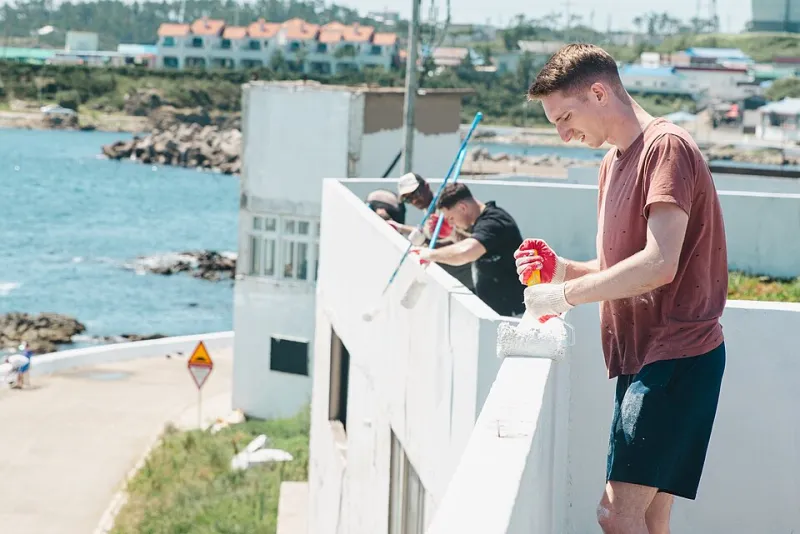
Photo: U.S. Marine Corps photo by Cpl. Luis Agostini, Public domain, via Wikimedia Commons
The Question Every Funder Avoids
There is a moment in every grant relationship that funders rarely discuss in public: the final payment. The cheque clears, the monitoring report is filed, and the funder moves on to the next application round. What happens next is, for the most part, a matter of guesswork.
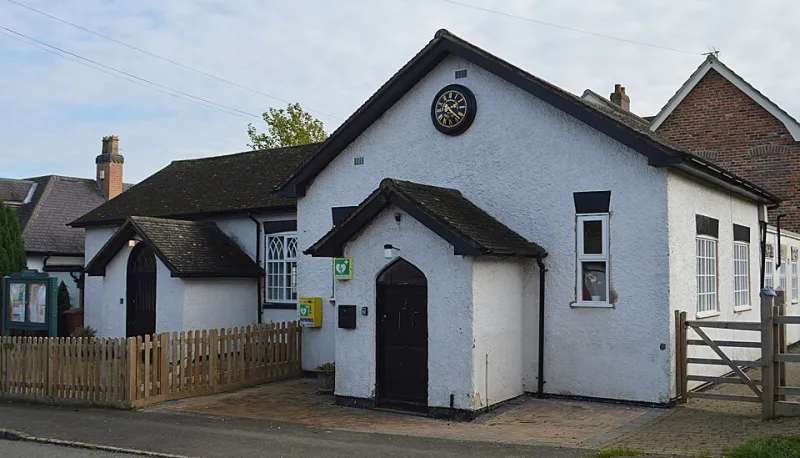
At the Fraser Thomson Foundation, we decided that guesswork was no longer good enough. Five years ago, we began tracking every project we had funded to completion, and three of them — a lunch club in a former mining village, a youth mentoring scheme in a Midlands town, and a community garden on the edge of a seaside resort — offered lessons we did not expect.
The Lunch Club That Outgrew Us
The lunch club was the least ambitious of the three on paper: hot meals twice a week for older residents, run by two volunteers and a part-time coordinator. Our grant covered three years of coordinator salary and kitchen equipment.
When the funding ended, we assumed the club would struggle. Instead, it flourished. The reason was unglamorous. The coordinator had spent three years quietly building relationships — with the parish council, with the local butcher who discounted meat, with a retired accountant who joined the committee. By the time we left, the club had a waiting list, a rota of eleven volunteers, and a small income from a weekly raffle.
Crucially, the committee had never thought of the Foundation as the club's owner. They had thought of it as a guest. That distinction, we now believe, is everything.
The Mentoring Scheme That Mistook Momentum for Sustainability
The youth mentoring scheme told a different story. It was, by every measure we used at the time, our strongest grant: clear outcomes, engaged beneficiaries, enthusiastic reports. The coordinator was exceptional, and the numbers were genuinely impressive.
But the scheme's strength and its weakness were the same thing. Everything ran through one person. When she took a job elsewhere six months after our final payment, no successor could be found at the salary the budget allowed. Referrals dried up within a term. By the following autumn, the scheme had folded.
We had funded momentum, not structure. Our monitoring had measured attendance and outcomes, but never asked the harder question: if this person left tomorrow, what would remain?
The Garden That Learned to Ask
The community garden occupied the middle ground. It survived, but not gracefully. For two years after our exit, it limped along on goodwill and occasional one-off grants, its committee reluctant to ask users for anything beyond participation.
The turning point came when a new treasurer joined and introduced a modest £2 annual membership. Some committee members feared it would drive people away. It did the opposite: members began treating the garden as theirs, and several went on to secure small grants themselves, with the treasurer's help. The garden now runs a summer open day that covers a third of its annual costs.
Its lesson is uncomfortable for funders: sometimes the most useful thing we can do is not give more, but give earlier — funding the financial confidence of a committee before funding the project itself.
What This Means for How We Give
Taken together, these three stories have reshaped our practice in three ways.
First, we now fund exit planning from day one. A grant application without a plausible answer to 'what happens when we leave?' is not rejected, but it is interrogated.
Second, we have stopped treating a charismatic coordinator as a strength. Where we find one, we now ask what the plan is for the day they leave — because in our sample, they always leave eventually.
Third, we ask less about income generation and more about ownership. Projects whose communities felt they belonged to them survived. Projects that belonged to their funder did not, no matter how well they performed on paper.
The Honest Conclusion
We cannot claim that better funding practice would have saved the mentoring scheme. Some projects end, and not every ending is a failure. But we can say this: the projects that endured were not the ones we funded most generously or monitored most closely. They were the ones where, quietly, the community had already begun to imagine a future without us.
Our job, it turns out, is not to be missed. It is to be unnecessary.