Ten Years, One Cheque: What Became of £20,000 in Millbrook
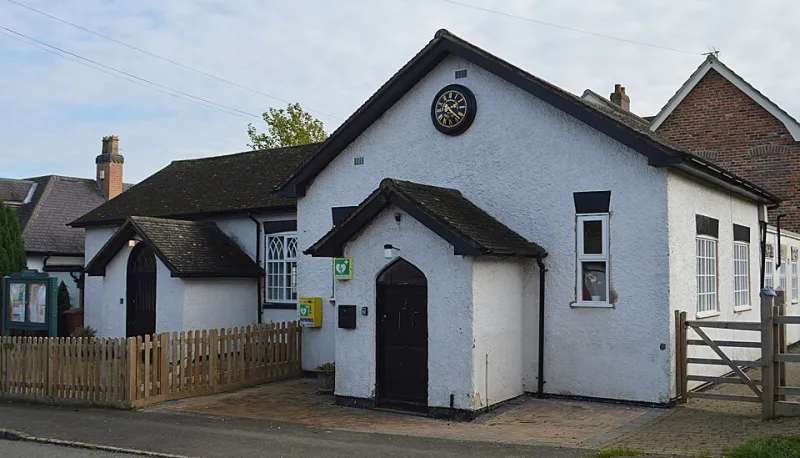
Photo: Russ Hamer, CC BY-SA 4.0, via Wikimedia Commons
Every funder keeps records. Very few go back and read them properly. In 2024, we decided to do something unusual: to trace a single grant — £20,000, awarded in the spring of 2015 — through every transaction, conversation and consequence we could document over the following decade. The grant went to Millbrook, a village of roughly 3,000 people between Barnsley and Penistone, and to a youth club that was, at the time, eleven weeks from closing.
What follows is not a success story in the usual sense. It is an accounting — of money, of course, but also of luck, timing and the considerable limits of our own foresight.
The Day We Said Yes
The application arrived in March 2015, written, as we later learned, by a retired joiner named Dennis who had volunteered at the club since the 1980s. The prose was unpolished. The budget was hand-drawn. What the application made clear, however, was that the Millbrook Youth and Community Association had lost its local authority grant in the rounds of austerity cuts and was surviving on a dwindling float from jumble sales.
Our assessors recommended £20,000 over two years — enough to cover the hall's heating, a part-time coordinator's hours and the insurance bill. On the approval slip, one trustee wrote: "Worth it if it buys them three years to find a model." That sentence, it turns out, underestimated everything that followed.
The First Ripples
The immediate effects were unglamorous and, frankly, exactly what the money was for. The boilers were serviced. The Tuesday and Thursday sessions, which had been running on goodwill and a rickety electricity meter, continued without interruption. Attendance held at around forty young people a week.
But stability has a chemistry of its own. Within a year, the club used its renewed footing to win a £35,000 award from a regional fund — an application its coordinator admitted they would never have written had the club been in crisis. A local housing association, seeing a functioning community asset, contributed a new kitchen. By 2018, the original £20,000 had helped attract roughly four times its value from other sources. Funders, it turns out, are a herd animal: nothing signals a safe bet like another funder already in the field.
Jobs Nobody Planned
Here is where the trail grows complicated. In 2019, the club's coordinator position, previously funded by grants like ours, was made permanent through a partnership with the local college, which began delivering vocational courses from the hall two evenings a week. Two part-time roles followed. Neither job would appear on any spreadsheet as an outcome of our 2015 grant — and yet the causal chain is not hard to draw. A warm, open building with a reliable manager is infrastructure. Infrastructure generates employment.
During the pandemic, the hall became Millbrook's informal distribution point for food parcels, run by volunteers who had first met, in several cases, at the youth club themselves. One of them, a young woman who had attended the Thursday sessions as a teenager, is now the club's deputy coordinator. She is, by our count, the second person whose livelihood traces a line back to that original cheque.
What We Could Not Have Predicted
It would be convenient to claim that our assessors saw all of this in the application. They did not. The trustees who approved the grant hoped, at best, to buy time. The catalytic effects — the college partnership, the volunteer pipeline, the pandemic response — emerged from the village's own networks, not from our theory of change.
This is the uncomfortable lesson of tracing money honestly: funders are rarely the authors of the stories we later tell about ourselves. We supplied fuel at a critical moment. The engine belonged to Millbrook. Dennis, the joiner who wrote that first application, died in 2021; the club now runs an annual five-a-side tournament in his name, which raised £1,100 last year — more, in a small way, than the club's entire 2015 reserve.
The Case for Looking Back
We publish this account for two reasons. First, because accountability should run in both directions: if we expect beneficiaries to report on every pound, we should be willing to examine our own. Second, because the exercise changed how we assess applications. We now place greater weight on the strength of local relationships — the Dennises of this world — and less on the polish of the budget spreadsheet. A hand-drawn budget in a village that looks after its own has, on the evidence of the last decade, outperformed many a professionally typeset business plan.
£20,000 bought ten years of continuity, four jobs, several hundred meals and a football tournament. None of it was in the plan. Most of it was predictable only in hindsight, and only to those willing to look. We recommend the look.