The People Behind the Applications: Meeting Britain's Part-Time Fundraisers Who Hold Small Charities Together
Photo: Unknown authorUnknown author, Public domain, via Wikimedia Commons
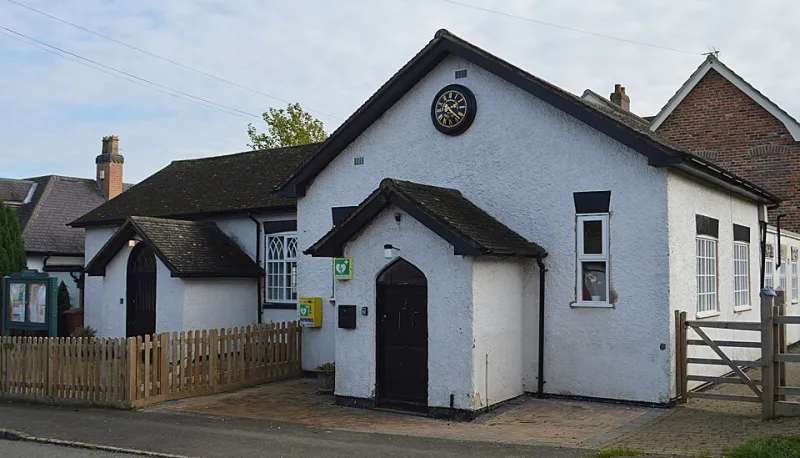
On a Tuesday morning in a converted chapel in the Valleys, a woman named Glenys is writing a funding application with one hand and answering the door with the other. The charity she works for — a food redistribution project serving three former mining villages — employs four people. She is the only one whose job title mentions money.
Glenys is not unusual. She is barely visible. Yet across England and Wales, thousands of people like her form the connective tissue between small community organisations and the grant funding that keeps them running. They are rarely fundraisers by training. They are administrators, project coordinators, volunteers-turned-staff who have learned, on the job, how to translate a youth club or a befriending service into the language that funders understand.
The Fraser Thomson Foundation works with hundreds of organisations of this size, and we have come to believe that the person writing the application matters as much as the project being described. This article is an attempt to describe that labour honestly.
Three Desks, Three Counties
We followed three part-time grant writers over four months: Glenys in Wales; Marcus, who works twenty hours a week for a community transport scheme on the edge of Peterborough; and Priya, who supports a women's wellbeing group in East Lancashire while also doing the charity's bookkeeping.
Their working patterns share a shape. Each holds multiple roles within a single organisation — Priya estimates that grant writing occupies perhaps a third of her contracted hours, but two-thirds of her mental energy. Each writes between eight and fifteen applications a year, with success rates hovering between twenty and thirty per cent. Each describes the work as a kind of translation: taking the messy, relational, everyday business of a small charity and rendering it into outcomes, outputs and monitoring frameworks.
Marcus puts it plainly. 'The minibus doesn't care about theory of change,' he says. 'But if I want the minibus funded, I need twelve hundred words about journey outcomes.'
The Quiet Gatekeeping Effect
What emerges from these conversations is something funders rarely discuss: this hidden workforce shapes which communities get money, and which do not.
Small charities in affluent areas can often afford consultants, or can draw on volunteers with professional writing experience. In places like Glenys's valleys or Priya's mill towns, the grant writer is often one person, part-qualified, learning funder priorities through trial and error. When the application is the product, and the applicant's ability to write the application determines the outcome, inequality reproduces itself quietly.
Priya is candid about it. 'There are groups in my town doing brilliant work who will never get funded, not because their work is worse, but because nobody has three hours and a thesaurus.'
This is not an argument against assessment rigour. It is an argument that funders should assume the application is a filtered document — filtered by writing confidence, by time, by the accident of who happens to be in the office.
When One Person Leaves
The fragility of this model became clear to us when Glenys resigned.
She had been the sole fundraiser for her organisation for six years. There was no handover document; the knowledge lived in her head and in a folder of old applications. Within nine months, the charity had lost two grants, missed a renewal deadline and reduced its delivery from five days a week to three. The new coordinator was capable, but starting from scratch — funders she had never met, jargon she had to decode, a pipeline that existed nowhere on paper.
Glenys describes her departure not as burnout, exactly, but as something adjacent. 'You're always one rejection away from being the person who lost the money. That's a heavy thing to carry for fourteen hours a week.'
Her story is common enough that funders should treat it as data. When we lose a grant writer, we rarely lose just a grant writer. We lose relationships, institutional memory, and the accumulated craft of knowing which funder funds what, and why.
What Funders Can Reasonably Do
We do not think the answer is for funders to write applications on applicants' behalf. But the profiles we followed suggest several modest changes with outsized effects.
First, funders can offer application support as standard rather than as a concession — a phone call before submission, a draft conversation, a named contact. Second, they can fund the fundraiser: core costs that cover someone whose job is securing the next grant, rather than treating that role as overhead to be minimised. Third, they can shorten forms. Every funder who trims a question is returning an hour to a person like Priya, who will spend it on the women her charity exists to serve.
Finally, funders can pay attention to continuity. Where a small charity loses its sole fundraiser, a small transition grant — a few thousand pounds for handover, documentation and training — costs less than one failed project cycle.
A Closing Note
Glenys now works for a housing association. The chapel in the Valleys has a new coordinator, an application folder, and a funding pipeline that is, for now, holding.
We profile her, Marcus and Priya not because their situations are extraordinary, but because they are ordinary — because the sustainability of Britain's small charity sector rests, in large part, on people whose job titles never mention fundraising at all. If we want stronger communities, we should start by seeing them.