One Postcode, Forty Rooms: The Hidden Geography of Community Space
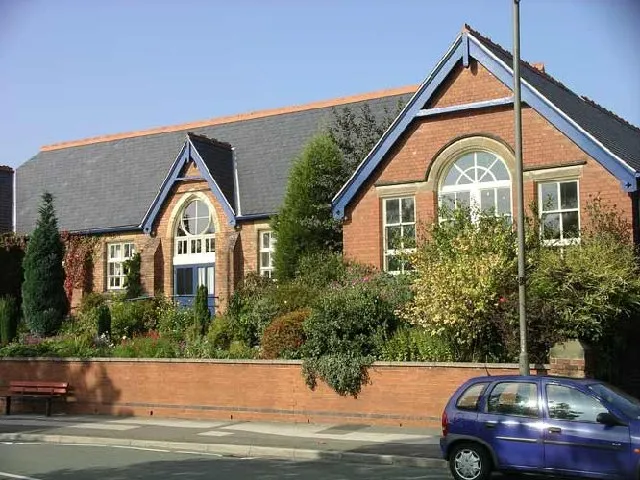
Photo: mike smith, CC BY-SA 2.0, via Wikimedia Commons
There is a particular kind of optimism in a community centre's booking diary. The pages are filled with coffee mornings, youth clubs, befriending circles and debt advice sessions — the accumulated good intentions of a neighbourhood. But diaries, like buildings, favour those who already know how to get through the door.
Last autumn, the Fraser Thomson Foundation commissioned a small piece of research that we have come to think of as an audit of the ordinary. We chose one postcode district — a mid-sized settlement in the North of England that we have agreed not to name, at the request of local partners — and attempted the deceptively simple task of mapping every room in which a community group could plausibly meet.
What We Counted
The final tally came to forty-one spaces. Nine were church or chapel halls, often the largest and cheapest options available. Seven belonged to the local authority: two leisure-centre multipurpose rooms, a town hall annexe, and three spaces in libraries, one of which has since closed. Five were pub function rooms. The remainder were scattered across schools, a Masonic hall, a sports pavilion, a former working men's club and two purpose-built community centres built in the 1970s.
On paper, this looks like abundance. Forty-one rooms for a population of roughly fifteen thousand. Any funder glancing at a map might reasonably conclude that the infrastructure question here was settled long ago.
The Gaps Behind the Map
The picture changed once we asked who could actually use each space.
Sixteen of the forty-one required a minimum hire commitment that priced out groups meeting fortnightly on donations alone. Nine had no step-free access. Seven operated booking systems that assumed a level of administrative confidence — forms, deposits, public liability certificates — that many newly formed groups, particularly those led by residents for whom English is an additional language, found daunting. Three were, in practice, unavailable to any group discussing contentious matters, owing to the politics of the organisations that ran them.
One youth worker put it plainly: "There are forty rooms in this town and about six we can actually use. The rest are either shut, expensive, or belong to someone who'd rather we didn't ask."
The Building Is the Programme
Funders, ourselves included, tend to treat premises as a solved problem — a line item beneath programme grants. What this audit suggested is the opposite: the building often is the programme. A group with brilliant ideas but no affordable, accessible, reliably warm room in which to meet will not fail loudly. It will simply never form.
There were encouraging signs too. A community trust had taken over the shuttered library and now lets its back room free of charge to any group with a member living in the ward — a policy so simple it deserves wider imitation. A Baptist church had abolished deposits for first-time hirers, on the reasoning that the deposit existed to protect the church from people who had already decided to come back.
What We Are Doing About It
From this year, our community spaces fund will prioritise applications that address access rather than acquisition. A new build is rarely the answer; a lowered booking threshold usually is. We will also publish our own audit template, so that other funders can ask the same uncomfortable question of their patch: not how many rooms exist, but who is in them.