Five Thousand Pounds, Delivered Quickly: The Quiet Power of Small Grants
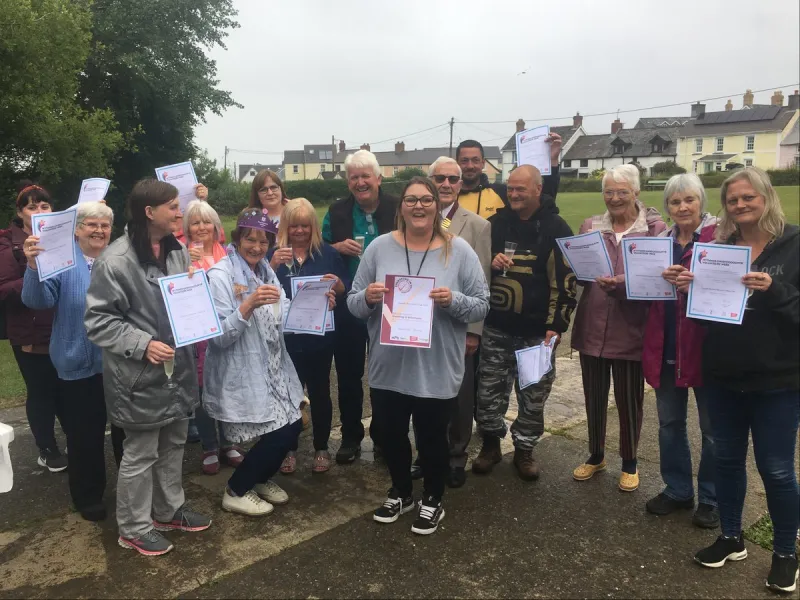
Photo: village hall community meeting volunteers UK, via www.cambrian-news.co.uk
In the ledger of British philanthropy, the large grant occupies a privileged position. Six-figure awards come with press releases, ceremonial cheque photographs, and the comfortable assurance that something significant has been achieved. Yet spend any time among the community groups that actually hold neighbourhoods together — the mother-and-toddler committees, the allotment associations, the one-man-band food larders — and a different picture emerges. It is the small, swiftly delivered grant that most often changes circumstances on the ground.
The Case of the Leaking Roof
Consider a familiar scenario. A community hall in a former mining village in the East Midlands discovers, in October, that its boiler has failed. The hall hosts a warm bank, a dementia café, and a slimming group; without heating, all three close by November. A £500,000 capital programme would be transformational, certainly — but the application process alone would outlast the winter. A £5,000 grant, decided within a fortnight, keeps the doors open.
This is not an argument against ambitious funding. It is an argument about proportion and timing. Community Life Survey data has repeatedly shown that the majority of grassroots groups operate on reserves measured in weeks, not months. For them, the decisive variable is rarely the size of a grant; it is whether the money arrives before the crisis becomes a closure.
Where Large Grants Struggle
The mismatch between institutional funding and grassroots reality is structural, not personal. Large grants demand governance documents, audited accounts, theories of change, and evaluation frameworks — all reasonable requirements for a £500,000 programme. But the volunteer treasurer of a youth club in Salford, who works full-time and keeps the books in a ring binder, cannot reasonably produce them. The result is a quiet sorting mechanism: funding flows to organisations equipped to apply, not necessarily to those best placed to deliver.
There is also the matter of what small grants buy. Five thousand pounds to a residents' association might fund a summer programme on a neglected estate, or cover insurance and equipment for a new walking group tackling rural isolation. These interventions rarely make national headlines, but their cumulative effect — on loneliness, on health, on local trust — is precisely the sort of change funders say they seek.
A Practical Framework for Simpler Giving
At the Fraser Thomson Foundation, our experience suggests that funders wishing to unlock this potential can act on four fronts.
First, set a fast lane. Create a decision track for applications under £10,000 with a target turnaround of no more than four weeks. Trust, once demonstrated, reduces the need for heavy due diligence.
Second, right-size the paperwork. A two-page form, a short conversation, and a simple budget will surface everything a funder genuinely needs to know about a group spending a few thousand pounds.
Third, fund the boring things. Boilers, insurance, bookkeeping software, volunteer expenses. Core costs are unglamorous, but they are what keeps organisations alive between the projects funders prefer to celebrate.
Fourth, report lightly and learn honestly. A one-page reflection six months later teaches a funder more than a forty-page evaluation ever will — and respects the grantee's time.
The Wider Dividend
There is a broader civic argument too. When a local group receives a grant quickly and without humiliation, it does more than deliver a service. It signals that the wider world has noticed its efforts. Volunteers stay, committees fill, and the quiet infrastructure of community life — the thing no statutory body can substitute for — is reinforced.
None of this diminishes the value of large, strategic funding. But Britain's community fabric is stitched together in £5,000 increments, and funders who learn to sew at that scale will find their money travels further than they imagined.